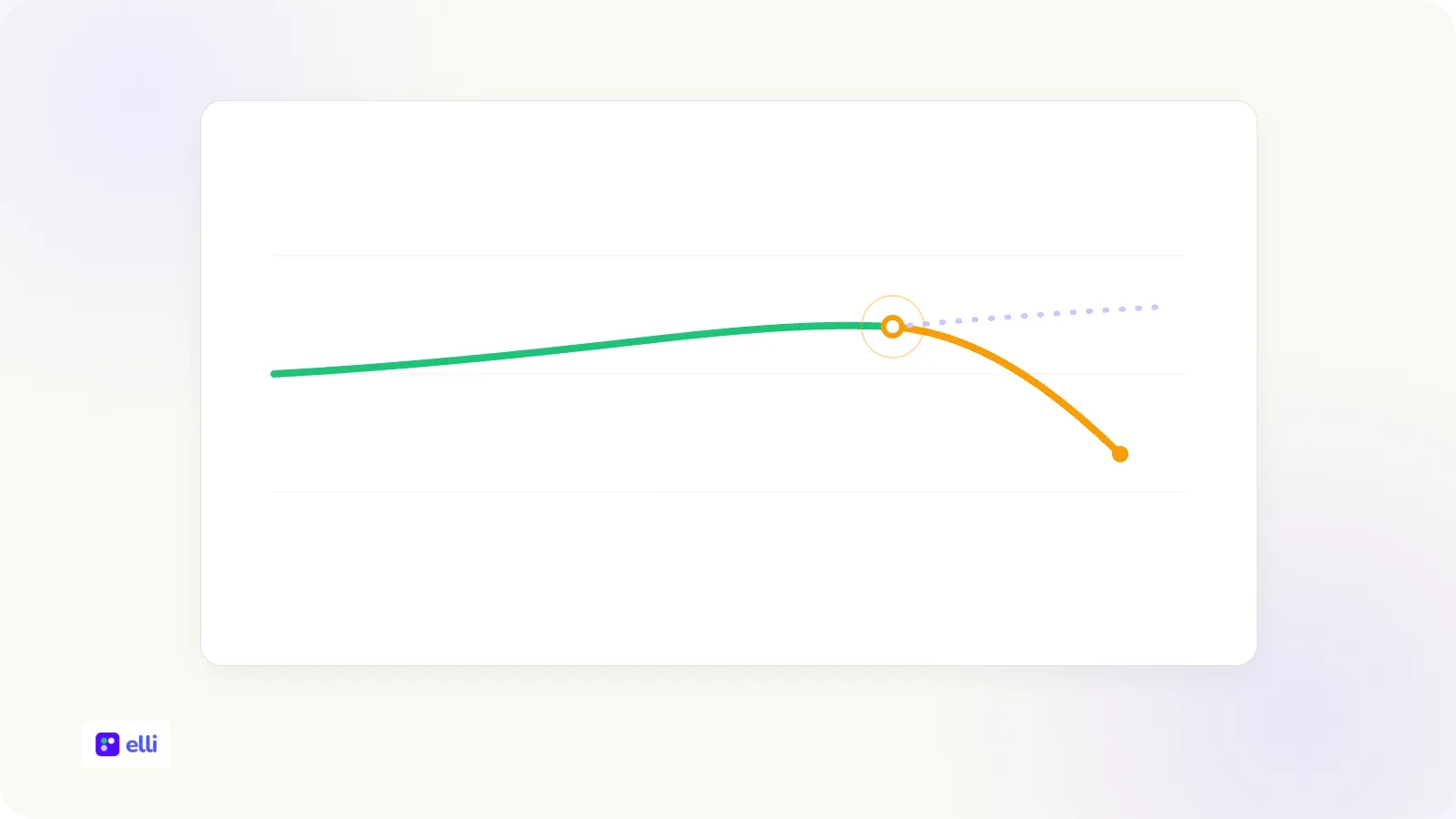
Did you know that the unexpected departure of one employee costs you an average of USD 45,236 in 2026? It’s a huge drain on your budget and on the continuity of your teams. You watch talent leave without understanding the real reason. Recruitment and onboarding costs climb, while engagement on the floor drops. This reactive firefighting has to stop. It’s time for a new approach that looks further than the exit interview.
You know a stable team is the foundation of success, but keeping people often feels like guesswork. By choosing data-driven employee retention with conviction, you transform HR from an administrative department into a strategic engine. In this article you’ll discover how, with workforce intelligence and data-driven insights, you can build a proactive retention strategy that truly holds on to talent. elli helps you bridge the gap between raw numbers and human psychology. We’ll cover how to set up a predictable retention model, set clear priorities for your leadership, and increase employee engagement through targeted action.
Key takeaways
- Replace gut feeling with facts and transform your HR policy from a reactive into a proactive force.
- Recognize the difference between leading and lagging indicators to predict departures before they become a problem.
- Build the foundation for data-driven employee retention by combining qualitative feedback with quantitative workforce data.
- Understand how a workforce intelligence platform like elli detects invisible risks and translates them into strategic HR actions.
- Implement a five-step plan to build a predictable retention model that holds on to talent over the long term.
Table of contents
- What is data-driven employee retention and why is it crucial?
- The building blocks of an intelligent retention strategy
- Leading vs. lagging indicators: stop looking backwards
- In 5 steps to a data-driven retention policy
- How elli turns data into action for your organization
What is data-driven employee retention and why is it crucial?
In a world where talent is the most important currency, an annual performance review is no longer enough. What is data-driven employee retention , exactly? It is the strategic use of workforce data to predict turnover and prevent it proactively. We’re moving decisively from gut feeling to hard facts. Where HR once relied on intuition, the modern market dictates an analytical approach. Traditional methods fail because they’re reactive. You only respond once the resignation letter is on the table. That’s too late. Workforce intelligence forms the basis for long-term success by recognizing patterns the human eye misses. It lets you intervene before an employee’s motivation hits zero.
The invisible costs of employee turnover
Turnover is a silent profit killer. The direct costs are painfully clear: job advertisements, recruiters’ hours and the intensive training of new hires. According to research by Express Employment Professionals, the average cost per departing employee already stands at USD 45,236 in 2026. But the indirect damage cuts deeper. You lose institutional knowledge that took years to build. Team morale slumps as the remaining colleagues absorb the extra workload. Even customer satisfaction suffers from the lack of continuity in relationships.
- Direct costs: recruitment costs, onboarding and administrative handling.
- Productivity loss: the period when a seat stays empty and the time it takes the successor to get up to speed.
- Cultural impact: a domino effect where the departure of one key figure makes others start to doubt.
The visibility gap in your organization
Why are managers often surprised by a resignation? There is a gap between what leaders think is going on and the reality on the floor. Blind spots in company culture stay invisible without the right instruments. Think of a toxic atmosphere in one specific team or a lack of growth opportunities that is never voiced. Data-driven employee retention exposes these hidden patterns. It offers the transparency that is essential for modern leadership. Instead of guessing at the reasons for dissatisfaction, you get a clear view of the current risk factors. You see the storm coming before it breaks. That way you transform a fragile organization into a resilient system that people consciously keep choosing. With elli you make this shift from uncertainty to absolute clarity.
The building blocks of an intelligent retention strategy
An intelligent retention strategy does not rest on assumptions. It rests on a robust foundation of data. To truly understand turnover, you have to bring together diverse sources across your organization. This goes beyond simply counting the people who leave. It’s about building an ecosystem in which continuous feedback is central. The role of AI here is crucial. It filters enormous volumes of complex workforce data for the relevant patterns that stay invisible to the human eye. Successful organizations understand that data-driven employee retention is not a one-off project, but a strategic necessity. You combine quantitative figures from your HR systems with qualitative insights from surveys to see the full story.
Engagement surveys and pulse measurements
Annual surveys are relics of the past. They offer a static snapshot of a problem that has often been simmering for months. Pulse measurements, by contrast, catch signals in real time, so you can course-correct before dissatisfaction escalates. The secret is in the design of the survey. Ask questions that touch the psychological core of dissatisfaction, such as the balance between autonomy, workload and support. Absolute psychological safety is critical here. If employees fear reprisals for their honesty, the data will mislead you. Guarantee anonymity and communicate transparently about the actions you take based on their input.
Absenteeism and wellbeing analytics
Sick leave is often the last stop before the exit. Patterns in absenteeism data point more often to an approaching burnout or a fading engagement than to physical ailments alone. By integrating wellbeing analytics into your strategy, you see correlations that would otherwise stay hidden. A rising absenteeism rate in one specific team or one location is a flashing red light for your retention. Analyze this data without violating individual privacy by focusing on aggregated trends at team or department level. That way you identify structural problems in the working culture rather than individual cases.
AI and change readiness as new metrics
Rapid technological transformation is creating a new, often underestimated source of turnover: AI anxiety. Employees who fear their role becoming obsolete because of automation often start proactively looking elsewhere for more certainty. Measuring change readiness has therefore become a new, critical metric for modern talent management. Do your people understand the transformation? Do they feel capable of growing with it? By tackling resistance and uncertainty early with targeted training and transparent communication, you prevent technological progress from eroding your human capital. Discover how a workforce intelligence platform helps you turn this complex data into action points for your leadership.
Leading vs. lagging indicators: stop looking backwards
Most organizations steer their HR policy through the rear-view mirror. They focus obsessively on turnover figures and exit interviews. These are lagging indicators. They tell you what went wrong yesterday. By the time you analyze this data, the talent has already left the building. Proactive leadership requires a radical shift towards leading indicators. These are the signals that predict turnover before the employee has even made the decision. An intelligent retention strategy builds on this predictive power. It gives you the precious time you need to intervene in a targeted way. By putting data-driven employee retention at the center, you build a dashboard that not only explains the past, but shapes the future.
The limits of traditional HR metrics
Turnover figures are autopsy reports. They’re useful for annual reports, but worthless for prevention. Another danger lies in the use of averages. In a large organization, a healthy 10% average turnover can hide a toxic situation in one specific team where turnover runs at 40%. You miss the nuance that is essential for effective intervention. Moreover, employee satisfaction is a treacherous metric. A satisfied employee can still leave for a marginal pay rise elsewhere. Loyalty, on the other hand, is a strategic connection to the organization. Data on engagement and the willingness to make an extra effort weigh more heavily than a simple score on a satisfaction survey.
Recognizing predictive signals
Which signals do predict the departure of your top performers? A sudden drop in the willingness to go along with change is often a precursor. When people stop asking questions about the future or withdraw from transformation projects, their mental departure has often already begun. Running a change readiness assessment offers crucial insights here for your retention policy. Beyond that, internal mobility is a powerful predictor. Organizations where talent can move horizontally or vertically see a higher retention rate. Employees who see that their career can flourish within the walls of your company are less quick to look outside. With elli you bring these leading indicators together in one clear dashboard. That way your leadership stays a step ahead of the competition and you keep control over your human capital.
In 5 steps to a data-driven retention policy
A strategy without execution is an illusion. To make data-driven employee retention a reality, you need a structured process. It’s not enough simply to collect data. You have to make that data work for your leaders and your teams. Many organizations fail because they miss the step from analysis to action. This five-step plan closes that gap and brings calm to your organization.
- Step 1: define your critical success factors. Determine exactly which metrics have an impact on your business results. Focus on what you really want to change, such as turnover among high-potentials or absenteeism in specific departments.
- Step 2: centralize your data. Use a workforce intelligence platform to bring all signals into one place. Fragmented data across various spreadsheets is useless data.
- Step 3: analyze risks at every level. Look further than the organizational level. Analyze risks specifically per team and per individual to eliminate blind spots in the company culture.
- Step 4: develop targeted action plans. Translate insights into concrete interventions. A team with a heavy workload needs different solutions from a team wrestling with a lack of growth opportunities.
- Step 5: measure impact and adjust. Retention is not a static goal. Monitor the effectiveness of your actions continuously and adapt your strategy based on new, incoming data.
From data to dialogue on the work floor
Data is the map, but the manager is the driver. Insights from a dashboard only gain real value when they lead to a sincere dialogue. Train your managers to use data insights as the basis for their one-on-ones. The aim is not to control, but to proactively understand what is going on with the employee. Create a constant feedback loop between HR and the business so that signals are not lost in the hierarchy. That way you also avoid “analysis paralysis”. Don’t waste time on endless reports about every tiny detail. Focus instead on the three key priorities that have the greatest impact on your retention rate.
Automation and scaling of retention efforts
Manual follow-up on workforce data does not scale in a modern company. In a growing organization you need software that continuously monitors workforce health without human intervention. Algorithms recognize patterns that can escape an HR manager, such as subtle changes in the frequency of pulse responses or specific absenteeism patterns. This allows you to personalize retention actions at scale. A user-friendly interface for leaders is essential here. If the tool is too complex, it will gather dust. elli gives leaders the tools they need to hold on to talent proactively without having to become data analysts themselves. Discover how you can start today with a workforce intelligence platform that delivers real results for your organization.
How elli turns data into action for your organization
Many organizations drown in data but are starving for usable insights. elli acts as the crucial bridge between raw workforce figures and strategic HR action. Its unique strength lies in the powerful combination of modular surveys and deep analytics on absenteeism and change readiness. Where other tools stop at reporting figures, elli starts by exposing the “why” behind the statistics. This is the essence of data-driven employee retention: you don’t just see that people are leaving, you understand which levers to pull to keep them. The platform detects risks at an early stage through AI-driven insights, so that you as a leader can intervene before a trend turns into a wave of resignations.
Insight into change readiness and wellbeing
Change is the only constant in today’s business environment, but it takes a toll on your human capital. elli helps you identify change fatigue before it leads to cynicism and turnover. By continuously monitoring the impact of new technologies and organizational shifts, you prevent innovation from eroding your company culture. We measure not only readiness but also wellbeing through advanced analytics. You get concrete handles for improving mental health on the work floor, supported by data on stress levels and energy reserves. This focus on workforce sustainability ensures that your team not only performs in the short term, but also stays healthy and engaged over the long term.
- Personalized dashboards: every leader gets a specific overview of the risk factors most relevant to their own team.
- Action tracking: turn insights straight into tasks and monitor the progress of your retention initiatives.
- Risk heatmaps: identify at a glance which departments or demographic groups need extra attention.
Start today with a smarter approach
Waiting for the next wave of resignations is a costly gamble you can’t afford. The average cost of USD 45,236 per departing employee in 2026 makes data-driven employee retention a financial priority. elli integrates into your existing HR processes without disrupting day-to-day operations. Transforming your organization into a place where talent consciously chooses to stay starts with transparency and predictability. By eliminating blind spots and trusting workforce intelligence, you shift from reactive anxiety to proactive leadership. The technology is there to support you; the first step is the decision to stop looking backwards and to actively shape the future of your team.
Take control of talent retention
The time for guessing at the reasons behind turnover is definitively over. You’ve seen that successful talent management rests on recognizing early signals and closing the visibility gap. By focusing on leading indicators and specialized assessments for AI and change readiness, you prevent talent from leaving before the decision has even been made. It is no longer a question of reacting to a wave of resignations; it is about building workforce sustainability.
With data-driven employee retention, you transform HR from an administrative function into a strategic engine. It offers the clarity you need to understand complex human systems and steer them effectively. elli gives you the handles you need for early risk detection and translates complex analytics into actionable workforce analytics for every team level. Don’t wait until the invisible costs of turnover weaken your organization.
Discover how elli transforms your retention strategy and create a work environment that people consciously keep choosing. You now have the knowledge and the means to make the difference for your organization and your people.
Frequently asked questions about data-driven retention
What are the most important data points for employee retention?
Leading indicators such as change readiness scores, engagement levels and absenteeism are crucial. You are not just looking at who is going, but especially at who is hesitating. Internal mobility and the time since the last promotion add extra depth to your analysis. Combined, these data points form the foundation of a predictable retention model that looks beneath the surface of HR statistics.
How can AI help predict employee turnover?
AI recognizes subtle behavioral patterns that stay invisible to the human eye. Think of subtle changes in the tone of feedback or a drop in participation rates in pulse surveys. By processing millions of data points, AI provides an accurate risk score per team or department. That way you can intervene in a targeted way before an employee makes the final decision to leave the organization.
Isn’t data-driven retention harmful to employee privacy?
No, provided you work with aggregated and anonymized data at team level. Transparency is the key to success here. Employees have to understand that their data serves to improve the workplace and not to monitor them individually. A platform such as elli guarantees anonymity, so that psychological safety is preserved while you gather valuable insights for your strategy.
How do I convince management to invest in workforce intelligence?
Focus on the hard business case and the avoidable costs of turnover. In 2026, the departure of a single employee costs on average USD 45,236. Show that workforce intelligence transforms this uncontrolled cost into a predictable investment. Leadership understands the language of risk management and strategic continuity more quickly than vague HR terms. Present data as a means of getting a grip on human capital.
What is the ROI of a data-driven retention strategy?
The ROI shows up as a direct drop in hiring costs and a rise in overall productivity. An effective data-driven employee retention strategy ensures that you waste less capital on replacement and onboarding. By reducing turnover by just a few percentage points, you save tens of thousands of dollars per year. On top of that, a more stable team drives higher customer satisfaction and a stronger market position.
How often should we run pulse surveys for reliable data?
Monthly or bi-weekly measurements are the standard for a modern organization. Annual surveys are simply too slow for today’s dynamic market. Short and sharp pulse surveys prevent survey fatigue and deliver a constant stream of relevant data. That way you can follow trends in real time and adjust immediately when engagement in a specific team starts to slip.
Can data analysis also help improve company culture?
Absolutely, because data makes the invisible pain points in your culture visible. You identify toxic patterns or a lack of recognition in specific departments without having to rely on rumours. By using objective facts, you avoid emotional discussions during management meetings. You build a culture based on listening and effective action, which is the foundation of a healthy and sustainable organization.
What is the difference between employee engagement and employee retention data?
Employee engagement data measures the emotional and intellectual connection an employee feels with their work. Retention data, by contrast, focuses specifically on the intention to stay or to leave. Data-driven employee retention uses engagement as a leading indicator to predict eventual turnover. One is the psychological cause; the other is the measurable business consequence of your HR policy.